There are great players who dominate domestic leagues. Then there are those rare, generational talents who seem built specifically for the grandest stage of all: the FIFA World Cup.
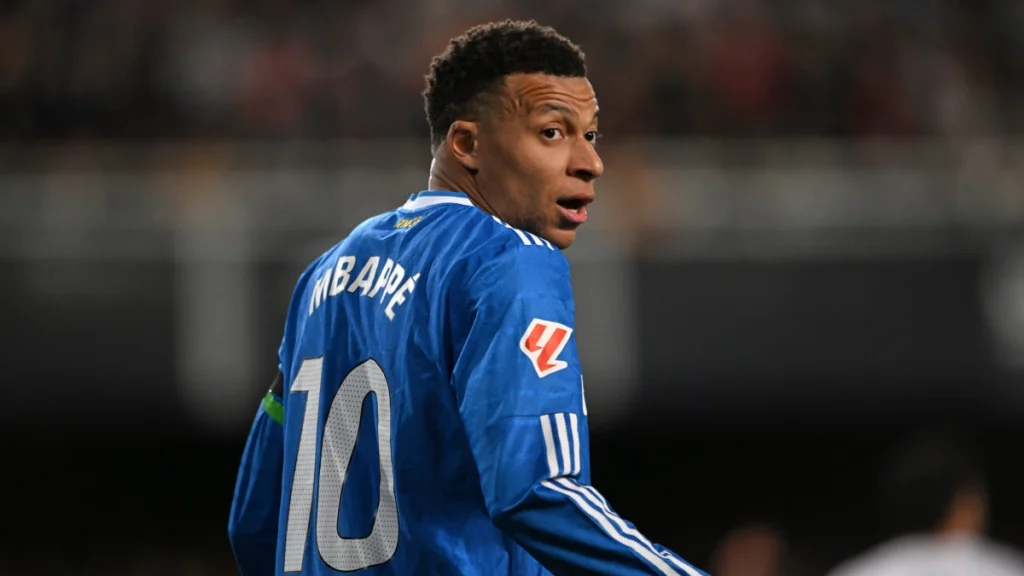
As the highly anticipated FIFA World Cup 2026 hub approaches, expanding across the United States, Canada, and Mexico, France captain Kylian Mbappé is entering the exact sweet spot of his career. At 27 years old, the elite forward finds himself at a crucial intersection where peak physical power meets veteran mental maturity. He is old enough to control matches psychologically, yet still explosive enough to terrify defenders physically.
The structural and tactical realities of this upcoming tournament indicate that it may suit him far better than either Russia 2018 or Qatar 2022 ever did—a frightening prospect for the rest of the footballing world.
The Abstract Numbers of a Legend in the Making
Mbappé has already racked up 12 World Cup goals before even celebrating his 28th birthday—matching the lifetime World Cup goal tally of the legendary Pelé.
World Cup Goals to Date:
[Pelé]      ████████████ (12 Goals - Career Total)
[Mbappé]    ████████████ (12 Goals - Age 27)
While that statistic alone is staggering, the broader story lies in how modern tactical trends are evolving directly in his favor.
Why Modern Defending Makes Mbappé Crucial
The defining tactical trend shaping elite football today is aggressive positioning. Full-backs push higher into the attacking third, defensive lines squeeze tightly up the pitch, and midfields press aggressively to win the ball early. While this approach helps modern teams establish territorial control, it can be entirely suicidal when facing a player of Mbappé’s profile.
The true danger of the Real Madrid forward is not simply his linear speed; the game is full of fast players. Rather, it is the unmatched rapidity with which he reads an unstable defensive shape. The split-second a center-back turns his hips the wrong way or a midfield press fails, Mbappé exploits the vacated space.
This is precisely why international tournament football plays into his hands:
- Emotional Escalation: Knockout fixtures naturally become frantic under high stakes.
- Structural Degradation: Tactical discipline cracks late in games under relentless pressure.
- Chaos Exploitation: Teams chasing equalizers are forced to open up, leaving wide expanses of green grass behind them.
Few players in the history of the sport punish chaos with the clinical precision of Mbappé. During France’s 2022 run, as matches became stretched and chaotic, he looked completely in his element while opposing backlines were visually exhausted.
The 48-Team Format: A Playground for Transition Superstars
One of the most heavily discussed changes for the upcoming tournament is the expanded 48-team World Cup format. This expansion naturally introduces a wider variety of tactical styles and potential mismatches, creating an ideal environment for world-class transition attackers.
When smaller nations face a star-studded French side, they will likely employ low-block defensive structures for long periods. However, if they fall behind or are forced to pursue a result in the final half-hour, they must abandon their deep positioning. Once a match stretches, Mbappé becomes devastating. Teams may successfully survive the French tactical structure for 60 minutes, only to completely collapse in the final portion of the match. The expanded layout will likely magnify the influence of individual match-winners, and Mbappé remains arguably the finest individual tournament player alive.
France’s Reimagined Attack: Eliminating the Overload
Crucially, Didier Deschamps’ side is no longer entirely dependent on their captain to create something out of nothing. According to recent France national team squad analysis, the emerging creative engine around him makes this current frontline deeper and more unpredictable than the squad that fell just short in the 2022 final.
With high-caliber creators and ball-carriers like Michael Olise, Ousmane Dembélé, Bradley Barcola, and Désiré Doué named in the official 26-man squad by SuperSport, opponents can no longer afford to simply double- or triple-team Mbappé’s flank.
The Tactical Shift: If an opposing manager skews their defensive block to overload Mbappé’s side, they leave massive, isolated spaces for players like Olise or the lightning-fast Dembélé on the opposite wing.
By surrounding him with elite technical quality, France forces defenders into isolated, one-on-one scenarios against Mbappé. In isolated space, he has no equal.
Forged by the Heartbreak of Qatar
Some athletes are broken by losing a World Cup final on penalties; others are sharpened by it. Mbappé’s historic hat-trick against Argentina in the 2022 final stands as one of the greatest individual performances ever witnessed on a football pitch, yet it still ended in defeat.
That specific brand of heartbreak typically leaves either fear or obsession. Mbappé’s recent performances suggest it has driven an absolute obsession.
There is a visible evolution in how the forward now dictates the rhythm of a match. He appears noticeably calmer, more patient, and highly calculated. Rather than spending 90 minutes constantly exploding into physical sprints, he bides his time, dropping deep to dictate tempo before picking the exact moment to strike. This seasoned version of the player is far more dangerous than the raw, fearless teenager who took Russia by storm in 2018. He thoroughly understands the nuances of tournament football.
The Absolute Standard in Open Space
In contemporary football, a compelling argument can be made: no player in the world is more dangerous in open transition.
This status isn’t sustained solely by physical attributes, but by his combination of elite traits:
- Unrivaled Acceleration: The ability to reach top speed in two strides from a static start.
- Clinical Finishing: Composure in front of goal, minimizing wasted opportunities.
- Impeccable Timing: Knowing precisely when to break the defensive line without straying offside.
- Calculated Decision-Making: Remaining clear-headed and cold-blooded under intense physical pressure.
Where typical transition forwards might panic or rush their final touch in high-leverage moments, Mbappé slows the game down in his mind while speeding up his physical actions.
This lethal transition capacity was on full display during recent preparation fixtures. Even when reduced to 10 men following a red card to Dayot Upamecano, France secured a 2–1 victory over Brazil in a high-profile tune-up match at Gillette Stadium, as reported by CBS Boston. Mbappé opened the scoring with a brilliant, calculated chip over Ederson, proving that high-pressing defensive blocks remain entirely vulnerable to his spatial awareness.
Physical Management: The Final Obstacle
If there is any legitimate threat to Mbappé dominating the upcoming tournament, it comes down to physical health and workload management. The forward has navigated a grueling club season with Real Madrid, coping with minor hamstring and ankle complaints during the domestic calendar.
However, the player has consistently prioritized his conditioning for the international stage. With France’s group stage itinerary locked in, managing his minutes early in the tournament will be paramount to ensuring he hits peak physical condition by the knockout rounds.
A Defining Campaign Awaits
Certain World Cups are remembered for innovative tactical systems, while others are defined by beautifully cohesive teams. But occasionally, a tournament belongs entirely to a singular, unstoppable force of nature.
The ominous reality for France’s rivals is that Mbappé is no longer a young prodigy chasing global recognition. He is an experienced leader in total command of his elite powers. If Les Bleus find their cohesion early in North America, this tournament could mark the moment where Kylian Mbappé transitions from being football’s present superstar to the defining icon of his era.
Explore More World Cup Coverage
- View the complete France fixtures & schedule to see their path through the group stage.
- Read our comprehensive Mbappé player profile tracking his international career stats.
- Check the latest Tactical analysis articles on how teams are setting up to stop elite transition attacks.
- Prepare for the tournament with our detailed World Cup stadium guides covering all North American venues.
FAQ
Who is France’s biggest player at the 2026 FIFA World Cup?
Kylian Mbappé is expected to be France’s biggest star heading into the 2026 FIFA World Cup because of his experience, pace, finishing ability, and previous tournament performances.
How many World Cup goals has Mbappé scored?
Mbappé has already scored 12 FIFA World Cup goals in his career, making him one of the most productive World Cup forwards of his generation.
Why does the 2026 World Cup suit Mbappé’s playing style?
The expanded 48-team tournament could create more open matches and transition-heavy football, which suits Mbappé’s explosive pace and attacking movement in open space.
Can France win the 2026 FIFA World Cup?
France are considered one of the favorites for the 2026 FIFA World Cup because of their squad depth, tactical flexibility, and experienced core of international players.
What makes Mbappé dangerous in knockout matches?
Mbappé is especially dangerous in knockout football because he can change matches quickly through counterattacks, direct dribbling, and clinical finishing under pressure.
Which players could support Mbappé for France in 2026?
France could build their attack around players like Ousmane Dembélé, Michael Olise, Bradley Barcola, and Désiré Doué alongside Mbappé.
Has Mbappé already won a FIFA World Cup?
Yes. Mbappé won the FIFA World Cup with France in 2018 and later scored a hat-trick in the 2022 World Cup final.
What is France’s biggest strength heading into World Cup 2026?
France’s biggest strength is their balance between elite attacking talent, midfield depth, and tactical adaptability in high-pressure matches.
Could World Cup 2026 define Mbappé’s legacy?
Many football analysts believe World Cup 2026 could become the defining tournament of Mbappé’s career if he leads France deep into the competition again.
Where will the 2026 FIFA World Cup be played?
The 2026 FIFA World Cup will be hosted across the United States, Canada, and Mexico.