Most World Cup winners fade from memory faster than people expect. They conquer a singular emotional peak, and then a slow, inevitable decline sets in.
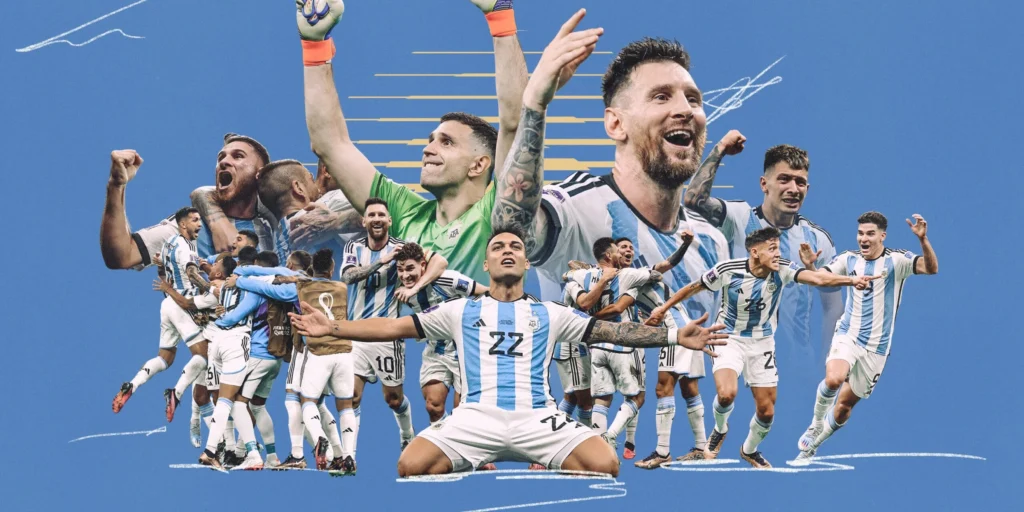
But Argentina is approaching the 2026 FIFA World Cup with an entirely different blueprint. They do not look like a veteran team fading after structural glory; instead, they look like an elite side executing a brilliant transition strategy. Lionel Scaloni is constructing one final masterpiece around Lionel Messi while seamlessly preparing for life after him.
That dangerous balance makes La Albiceleste the ultimate threat to repeat history.
Lionel Messi: The Evolved Emotional Core
At 38 years old, Messi remains the undisputed centerpiece of Argentina’s World Cup narrative. As reported by World Soccer Talk, Scaloni’s preliminary selection means Messi is on track to compete in a historic sixth FIFA World Cup—a feat previously unimaginable when he debuted as a teenager back in 2006.
The fascinating detail isn’t just that Messi is still here; it is how Argentina has completely restructured the tactical ecosystem around him. This team no longer relies on him to carry every single progressive sequence like he did in 2014 or 2018.
Instead, the modern setup maximizes his efficiency:
- Measured Buildup: Slower, deliberate possession phases to conserve his energy.
- Selective Movement: Low-volume sprinting until space opens up in transition.
- Lethal Zone Presence: Positioning him primarily in the final third to act as a pure, devastating creator and finisher.
This structural evolution ensures Messi remains physically sharp when it matters most, delaying his international retirement on the grandest stage.
The Engine Room: Direct, Balanced, and Vertical
If Argentina successfully defends its crown, the midfield will be the primary driver. The dynamic combination of Enzo Fernández, Alexis Mac Allister, and Rodrigo De Paul gives Scaloni a tactical luxury most international managers lack: absolute technical control blended with aggressive physical output.
[Possession Recovery] ──> [Enzo Fernández (Control)] ──> [Mac Allister (Stabilizer)] ──> [Direct Vertical Attack]
While Enzo controls deep progression and Mac Allister stabilizes central possession, De Paul acts as the emotional rhythmic heartbeat of the squad.
Crucially, the tactical difference compared to their run in Qatar 2022 is that Argentina now moves the ball forward much faster upon recovery. Rather than recycling possession endlessly, they have become a highly vertical unit. Modern World Cups increasingly reward teams that attack defensive imbalance immediately, and Argentina has added this exact weapon to its arsenal.
Julián Álvarez: The Emotional Pressing Trigger
While Messi provides the genius, Julián Álvarez has arguably become Argentina’s most critical structural player. To understand Argentina’s intensity without the ball, you have to watch Álvarez work.
According to tournament projections from FOX Sports, Álvarez offers elite versatility that transforms Scaloni’s pressing structure. He doesn’t simply operate as a traditional goalscorer; he functions as the trigger for the entire team’s high-press system.
| Player | Principal Tactical Role | Tournament Impact |
| Lionel Messi | Advanced Creator / Finisher | Spatial manipulation and decisive final balls |
| Julián Álvarez | Pressing Forward / Channel Runner | Recovers possession deep, creates defensive chaos |
| Lautaro Martínez | Central Target Finisher | High-volume penalty-box presence |
| Rodrigo De Paul | Box-to-Box Engine | Midfield ball progression and defensive cover |
Álvarez constantly suffocates opposing center-backs trying to build from deep, creating turnovers high up the pitch. This defensive work rate keeps the team looking incredibly young, intense, and dynamic.
Succession Planning: The Perfect Youth Integration
Most defending champions collapse because the next generation of talent arrives too late. Scaloni has avoided this trap by integrating youth prospects while the championship core is still intact.
The gradual introduction of high-end young talents like Nico Paz, Franco Mastantuono, and Thiago Almada means Argentina isn’t just protecting a memory; they are actively regenerating. This mental freshness prevents the squad from becoming emotionally complacent after winning both the 2022 World Cup and the subsequent Copa América.
The Structural Vulnerability: Defensive Recovery Pace
Despite their formidable identity, Argentina’s primary risk heading into the tournament resides in defensive mobility.
While Cristian Romero remains an elite, aggressive center-back, recent knee injury concerns have occasionally disrupted his continuity. Compounding this, veteran pillars like Nicolás Otamendi and Nicolás Tagliafico bring world-class leadership but lack the elite recovery pace needed to stop modern, transition-heavy attacks. Against young, direct counter-attacking teams like France or England, this defensive floor could become exposed late in high-stakes matches.
Ultimately, Argentina arrives at the 2026 World Cup believing they can still improve. With the world’s greatest player modified for maximum impact, perfect midfield stability, and a younger generation arriving at the absolute perfect moment, they are fully prepared to dominate one more time.
For full group breakdowns, detailed match stats, and tournament paths, explore the complete guide on worldcup11.com.
FAQs
Is Lionel Messi playing in World Cup 2026?
Lionel Messi is expected to be part of Argentina’s World Cup 2026 squad, potentially making it his sixth FIFA World Cup appearance.
Who are Argentina’s key players for World Cup 2026?
Argentina’s key players include Lionel Messi, Julián Álvarez, Enzo Fernández, Alexis Mac Allister, and Rodrigo De Paul.
Who is coaching Argentina at the 2026 FIFA World Cup?
Lionel Scaloni remains Argentina’s head coach and is expected to lead the team into World Cup 2026 after winning the 2022 FIFA World Cup and multiple Copa América titles.
Can Argentina win the 2026 FIFA World Cup again?
Argentina are considered one of the favorites for World Cup 2026 because of their tactical stability, experienced core, and strong emerging generation of young players.
What formation could Argentina use at World Cup 2026?
Argentina are expected to use flexible tactical systems built around midfield control, usually featuring a 4-3-3 or 4-4-2 structure with Julián Álvarez leading the press and Messi operating in advanced creative spaces.