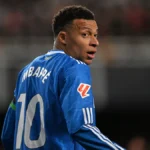
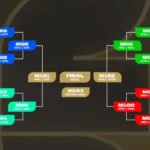
Brazil rarely arrives at a World Cup quietly, but the noise surrounding their 2026 campaign hits differently.
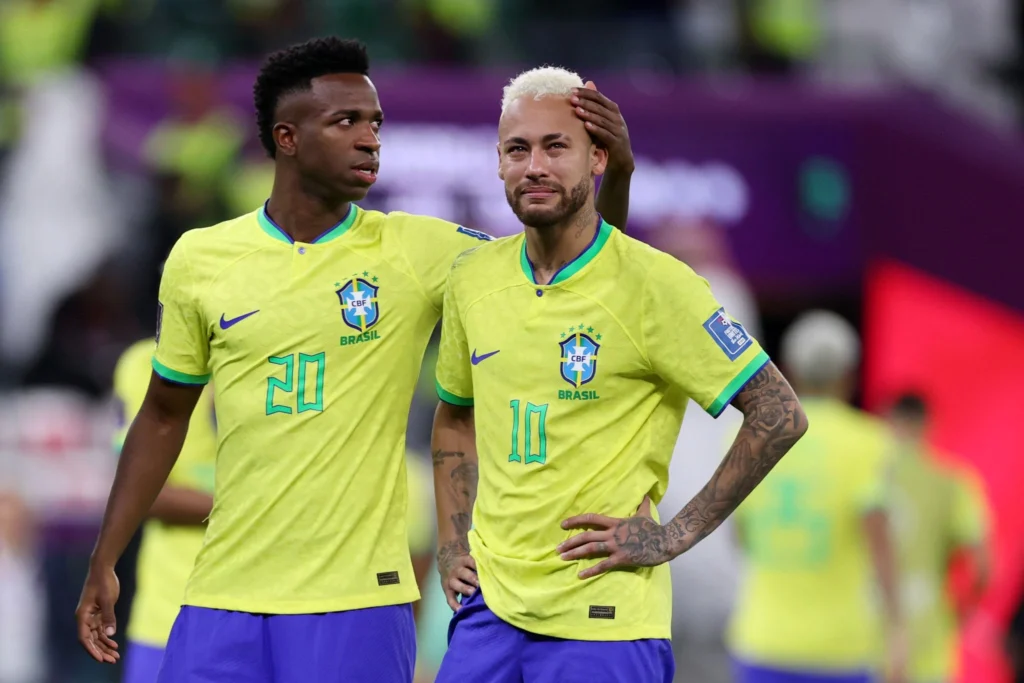
When head coach Carlo Ancelotti announced his 26-man roster for the tournament, a familiar headline stole the spotlight: Neymar is back. At 34 years old, and having not featured for the national team in over two and a half years following a devastating ACL tear, his inclusion has ignited fierce debate.
Ancelotti, who recently formalized his long-term vision by signing a blockbuster CBF contract extension through 2030, now faces the ultimate tactical puzzle. He must find a way to merge two entirely different eras of Brazilian football: the emotional, high-creativity twilight of Neymar, and the explosive, direct transition speed of Vinícius Jr.
The Romantic Gamble: Carrying Neymar’s Magic
Neymar’s return isn’t just about sentiment. According to report details from The Guardian, Ancelotti emphasized that the decision was rooted strictly in the playmaker’s improved fitness and recent form since returning to competitive action.
As Brazil’s all-time leading male scorer with 79 goals, Neymar offers undeniable assets:
- Generational Vision: Elite spatial awareness and ability to unlock stubborn low-blocks.
- Line-Breaking Passes: Decisive, delicate ball progression in the final third.
- Foul Drawing: The unique ability to slow down opponents and win dangerous set-pieces.
However, modern tournament football is ruthlessly physical and fast. If Neymar lacks the match engine to press effectively or track back in transition, Brazil risks becoming defensively vulnerable. The question isn’t whether Neymar has the talent—it’s whether the Seleção can afford the defensive trade-offs required to accommodate him.
The Strong Case for Vinícius Jr as the Main Weapon
While Neymar provides the emotional narrative, logic dictates that Brazil’s tactical blueprint must revolve around Vinícius Jr.
Having won major honors under Ancelotti at club level, Vinícius represents the absolute pin-up of modern wing play. He possesses the most feared weapon in international football: uncatchable, vertical transition speed from the left flank.
[Defensive Recovery] ──> [Bruno Guimarães] ──> [Vinícius Jr Space Attack] ──> [Goal Opportunity]
When Brazil wins the ball deep, Vinícius doesn’t look for a safe restart; he aggressively attacks vacated space before defensive lines can reset. For Brazil to lift their sixth star, Neymar should serve as the connector in central channels, while Vinícius must be deployed as the primary blade.
Tactical Blueprint: The 4-2-3-1 Framework
Ancelotti is expected to lean into a fluid 4-2-3-1 formation designed to extract the strengths of both stars while shoring up the spine. According to projected lineups from Goal.com, the tactical architecture relies heavily on midfield balance.
| Position | Projected Starter | Tactical Role |
| Goalkeeper | Alisson | Veteran tournament experience & sweep-up play |
| Center-Backs | Marquinhos & Gabriel | Physical anchors to defend deep transitions |
| Midfield Screen | Casemiro | Deep protection to foil counter-attacks |
| Deep Playmaker | Bruno Guimarães | Ball progression to ease pressure on Neymar |
| Attacking Trio | Raphinha, Neymar, Vinícius Jr | High-volume chance creation & dynamic width |
| Striker | Matheus Cunha / Endrick | Target man pressing or elite wildcard threat |
This setup leverages Bruno Guimarães’ world-class distribution, meaning Neymar won’t have to continuously drop into his own half to collect the ball. Simultaneously, Casemiro provides a safety net when dynamic full-backs push high up the pitch.
Why the Pressure in Group C is Real
Brazil finds itself in Group C alongside Morocco, Scotland, and Haiti. While it looks comfortable on paper, it represents a multifaceted tactical test.
Morocco will test their technical patience with a disciplined, compact mid-block, while Scotland will challenge them with aggressive physical directness. These group stages will serve as an immediate litmus test for Ancelotti’s balance.
The pressure is intensified by historical context: Brazil finished a highly unusual fifth in CONMEBOL qualifying standings, trailing behind Argentina, Ecuador, Colombia, and Uruguay.
The Reality Check: Finishing fifth in South American qualifying is an anomaly for football’s ultimate powerhouse. It highlights why Ancelotti’s appointment is so critical. He isn’t inheriting a flawless winning machine—he is rebuilding a giant.
If Ancelotti maps out the sweet spot—utilizing Neymar as the calculating brain, Vinícius as the devastating blade, and Guimarães as the midfield anchor—this team won’t just be a collection of star power. They might finally look like the historic Brazil again.
For comprehensive group analysis, tournament brackets, and live updates on the matches, check out the complete guide on worldcup11.com.
FAQs
Who is the coach of Brazil’s World Cup 2026 squad?
Carlo Ancelotti is managing Brazil’s World Cup 2026 squad after taking charge ahead of the tournament.
Is Neymar part of Brazil’s World Cup 2026 squad?
Yes. Neymar has been included in Brazil’s World Cup 2026 squad despite recent injury concerns.
Who are Brazil’s key players for the 2026 FIFA World Cup?
Brazil’s key players include Vinícius Júnior, Neymar, Bruno Guimarães, Raphinha, and Endrick.
What formation could Brazil use at World Cup 2026?
Brazil are expected to use a flexible 4-2-3-1 system with Vinícius Jr and Raphinha playing wide attacking roles around Neymar or a central striker.
Can Brazil win the 2026 FIFA World Cup?
Brazil are considered one of the favorites for World Cup 2026 because of their attacking depth, tournament experience, and Carlo Ancelotti’s tactical leadership.